Step 1
HIV Env Recognition
An HIV-targeting arm, such as broadly neutralizing Env recognition logic, supports binding to HIV-associated infected-cell targets.

A trispecific antibody strategy designed to combine HIV-associated target recognition with immune engagement and co-stimulatory logic for infected-cell clearance.
Macro HRD's trispecific antibody work is positioned around HIV reservoir-directed clearance rather than a generic multi-target antibody platform. The conceptual architecture combines HIV Env-binding or bNAb logic with CD3 engagement and CD28 co-stimulation.
A trispecific antibody is an engineered molecule containing coordinated functional binding domains. In the HIV program, those roles are framed as HIV-associated target recognition, CD3 immune engagement, and CD28 co-stimulatory support.
The result is a single molecule designed to identify HIV-associated infected-cell targets and recruit immune effectors with target-dependent immune activation.
The HIV antibody strategy works by combining target recognition, immune engagement, and co-stimulatory support in one molecule. Current claims are presented as research-stage and aligned with available program evidence.
An HIV-targeting arm, such as broadly neutralizing Env recognition logic, supports binding to HIV-associated infected-cell targets.
CD3 engagement may redirect T cells toward infected-cell clearance where target engagement is achieved.
CD28 co-stimulatory logic may support immune activation and effector function.
The construct is designed to support immune-mediated infected-cell clearance.
The conceptual program architecture is described around an HIV Env-binding arm or broadly neutralizing antibody logic, CD3 immune engagement, and CD28 co-stimulation. Published trispecific and bNAb literature supports the scientific rationale, while Macro HRD-owned development progress is presented separately according to disclosed program evidence.
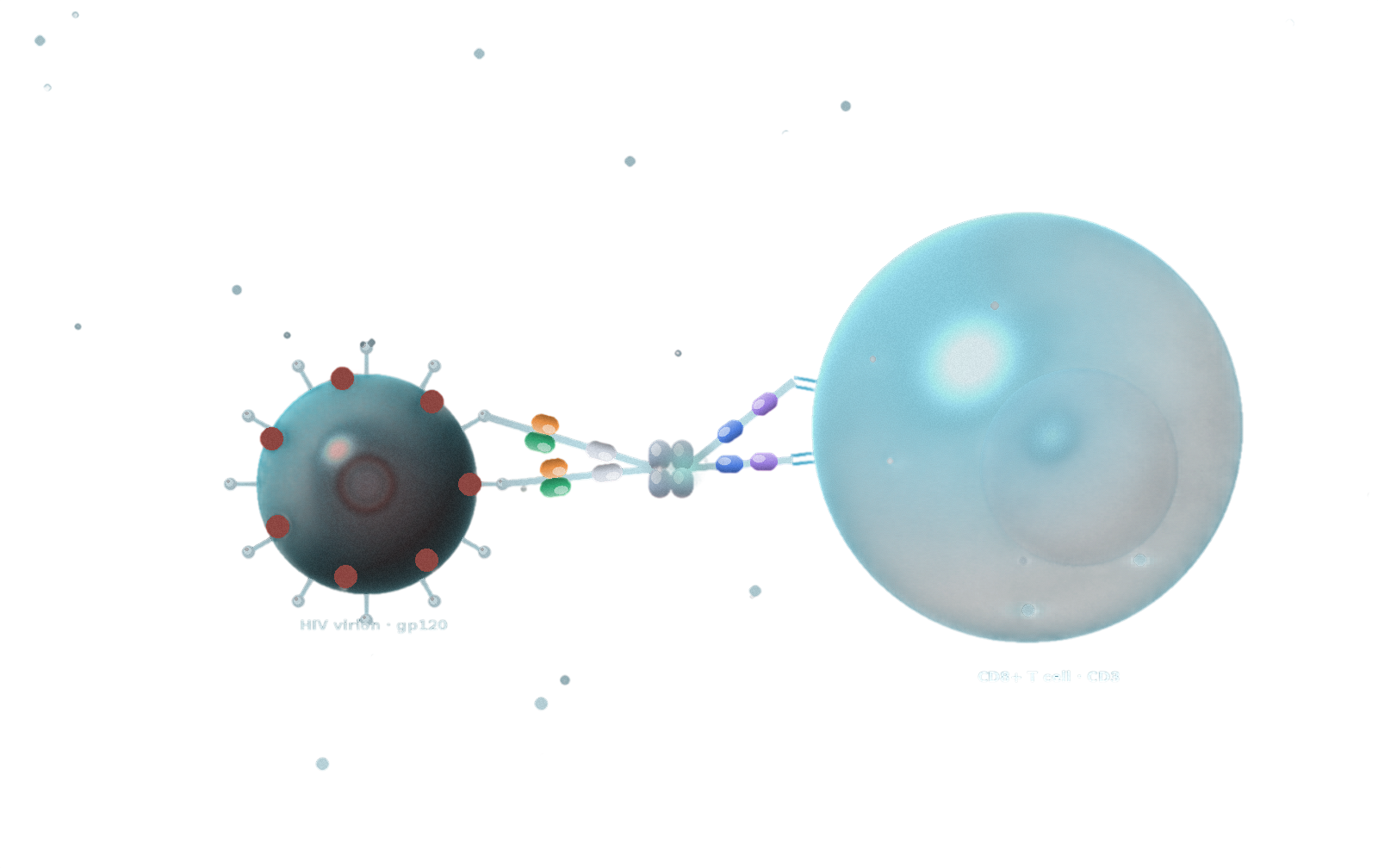
Broadly neutralizing antibody logic may support recognition of HIV-associated infected-cell targets.
CD3 engagement and CD28 co-stimulation may support target-dependent immune activation and infected-cell clearance.
The antibody strategy is designed for target recognition, T cell engagement, co-stimulatory support, and programmable architecture.
Single molecule with HIV-associated target recognition, CD3 engagement, and CD28 co-stimulatory support.
HIV-associated infected-cell targets can be recognized for immune engagement where target binding is achieved.
The strategy may recruit T-cell effector mechanisms to infected-cell targets through CD3 engagement.
CD28 logic may support immune activation and effector function in a target-dependent context.
A trispecific backbone can be re-armed with different binding domains for different targets.
The architecture fits settings where viral variation, reservoir persistence, and coordinated immune engagement matter.
Program evidence is organized to distinguish Macro HRD-owned development progress from background literature and collaborator context.
Construct screening is part of development and optimization, with public details aligned to approved disclosure.
Potency-related information is presented with construct and assay details communicated through approved disclosure.
Affinity-related information for HIV-associated and immune-engagement binding is communicated through approved public disclosure.
Safety-margin information supports ongoing development evaluation.
Biologics, CMC, and third-party validation context are communicated through approved public disclosure.
Clinical-context statements are communicated only through approved public disclosure.
Published trispecific, bNAb, SHIV, and reservoir biology literature supports scientific rationale and is presented as background alongside Macro HRD-owned program status.
Program stages reflect current public progress, with future updates aligned to validated development evidence.
The primary application is HIV, where Env recognition, CD3 engagement, and CD28 co-stimulatory logic are evaluated for infected-cell clearance and reservoir-directed strategy support.
In HIV, trispecific antibody architecture is used to support infected-cell recognition, immune engagement, and reservoir-directed clearance strategy development.
Future use outside HIV is presented as exploratory until disease-specific target logic and validation data are available.
The antibody strategy connects directly to HIV Trispecific Antibody (MACR - 001). Advanced LNP Blood–Brain Barrier Crossing Lipid Nanoparticle Delivery Platform and GEDM3DQ may support formulation evaluation or development planning where appropriate; AH-D remains a separate enveloped-virus peptide approach.